
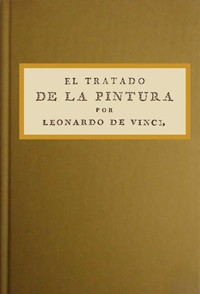
El tratado de la pintura by da Vinci Leonardo and Leon Battista Alberti
This volume puts two giants of the Renaissance in conversation. First, you get Leon Battista Alberti's On Painting. Written in 1435, it's like the first modern instruction manual for artists. Alberti breaks down the revolutionary system of linear perspective, giving painters the rules to create convincing depth and realistic space on a flat surface. He talks about composition, color, and even how to tell a good story with a painting.
The Story
Then, we jump ahead to Leonardo da Vinci's Treatise on Painting, which wasn't a single book he wrote, but a collection of his notes and observations compiled after his death. This is where things get wild. Leonardo's mind wanders everywhere. He obsesses over how light falls on a face, how to paint a convincing storm, the geometry of a tree's branches, and the emotions captured in a gesture. It's less a strict rulebook and more a passionate investigation of the entire visible world.
Why You Should Read It
Reading them side-by-side is thrilling. You see Alberti laying down the law—the foundational grammar of art. Then you see Leonardo, the ultimate student, learning those rules and then asking "why?" and "what if?" on every page. It shows the Renaissance mind in motion: first building a new framework, then filling it with boundless curiosity and life. You're not just reading about technique; you're inside the workshop where modern seeing was invented.
Final Verdict
Perfect for art lovers, history nerds, and anyone curious about how ideas evolve. It's not a breezy novel—some parts are technical—but dipping into these pages feels like touching the source code of Western art. If you enjoy podcasts or documentaries about creativity and genius, you'll find the original text just as fascinating.
This work has been identified as being free of known copyright restrictions. It serves as a testament to our shared literary heritage.
Matthew Martin
1 year agoClear and concise.
Edward Garcia
6 months agoThe layout is very easy on the eyes.
Edward Hill
11 months agoThanks for the recommendation.
Oliver Moore
2 years agoGreat read!

Christopher Martin
1 year agoLoved it.