
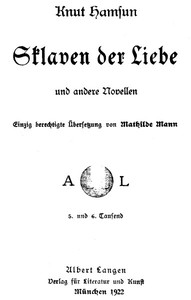
Sklaven der Liebe, und andere Novellen by Knut Hamsun
I stumbled across Sklaven der Liebe, und andere Novellen during a rainy afternoon, and it swallowed me whole. Knut Hamsun, best known for his bigger novels like Hunger, shows a different gear here—he’s intimate, uncomfortable, and unapologetically human. If you're a fan of psychological realism from early 20th-century Europe, you’re in for a treat.
The Story
Three novellas, each one a little gut-punch in its own way. The standout: “Sklaven der Liebe” (Slaves of Love) introduces a man utterly consumed with a woman who doesn’t care back. He pines, following her every careless move with this painful intensity, while she moves right past him. Is this passionate love or just thin, proud obsession? Another story focuses on a mentor and his bright but cleverly cruel student—the mind games had me saying 'uh oh' out loud. Hamsun doesn’t hook you with plot in a traditional way. Character is the story. These are everyday people letting small cracks in their relationships snowball into life-changing sores. No dramatic deaths, no villain. Just slow-motion emotional fires. You can’t look away.
Why You Should Read It
Because Hamsun gets you. That gloating bitter part of you when you’re mad and lonely? He names it. The things we do to avoid being alone—feeding insecurity out of hunger for affection—that’s his main dish. And you might squirm, because it’s not just him capturing characters; he’s capturing the lack of polish inside our own heads. Maybe even your latest text argument? Yes. It also offers a time walk back to German-speaking literary circles just before WWII, where gender and power battles took very different forms. The constant search for validation shows, despite language and period, nothing really changes about needy humans. Sneaky classic feel but zero thesaurus-drop.
Final Verdict
This isn't a happy-to-go feelgood beach read. It's possibly a problematic and wise look at inner romantic suffocation that riles you up over coffee long after. The sentences breathe deeply, characters fade way slower than you expect. Great for: anyone looking beyond modern and into messed up character-driven realism; readers smitten the idiosyncratic spaces of love and self destruct. Reclusive writer? Brooding lovers? Young cynics harboring a soft, messy heart. Hamsun’s words don't pander, they push. Just remember Hamsun later earned controversy—this view in his early work stuns clean like frost's cut. Expect insights, just don’t want cozy.
This historical work is free of copyright protections. Distribute this work to help spread literacy.
Michael Lopez
9 months agoI appreciate how this edition approaches the core problem, the breakdown of complex theories into digestible segments is masterfully done. The insights gained here are worth every minute of reading.
Mary Anderson
1 year agoInitially, I was looking for a specific answer, but the case studies and practical examples provided add immense value. Simple, effective, and authoritative – what else could you ask for?
Michael Johnson
7 months agoThe layout of the digital version made it easy to start immediately, the formatting on mobile devices is surprisingly crisp and clear. A rare gem in a sea of mediocre content.
Margaret Thomas
11 months agoI took detailed notes while reading through the chapters and the author manages to bridge the gap between theory and practice effectively. An excellent example of how quality digital books should be formatted.






Donald Harris
5 days agoI found the data interpretation to be highly professional and unbiased.