L
Lena Morgan
Guest
- Thread Author
- #1
A removable sofa cover can make a familiar piece of furniture feel different without replacing the frame. The awkward part often arrives later: several cushion covers, arm sections, and a large body cover emerge from storage, and nobody remembers which furniture they fit or whether the set is complete.
Houzz’s Fall 2026 report describes adaptable, personal interiors. Keeping an existing slipcover set identifiable supports that direction without treating another cover purchase as necessary. This guide concerns the identity, completeness, and return of removable furniture-cover sets. It does not establish compatibility or provide a universal washing method.
Record the furniture manufacturer, model, configuration, and any size or version information needed to identify it. “Living-room sofa” may be enough while you own one sofa, but it becomes ambiguous when a chair joins the room or a family member stores another set nearby. Add a private furniture identifier if the model is uncertain.
Photograph the correctly fitted cover while the arrangement is known. Include the overall furniture and useful details such as cushion positions, closures, or different left and right sections. The photographs are a memory aid; they do not prove that a similar-looking replacement will fit or show how an unfamiliar fastening should be forced into place.
Keep the order confirmation or product reference when available. IKEA’s KIVIK and UPPLAND sofa covers, for example, have different model identities even when both are described as sofa covers. Preserve that distinction rather than filing everything under color. The paper-versus-digital records guide can help retain a compact, retrievable reference without keeping every packaging insert.
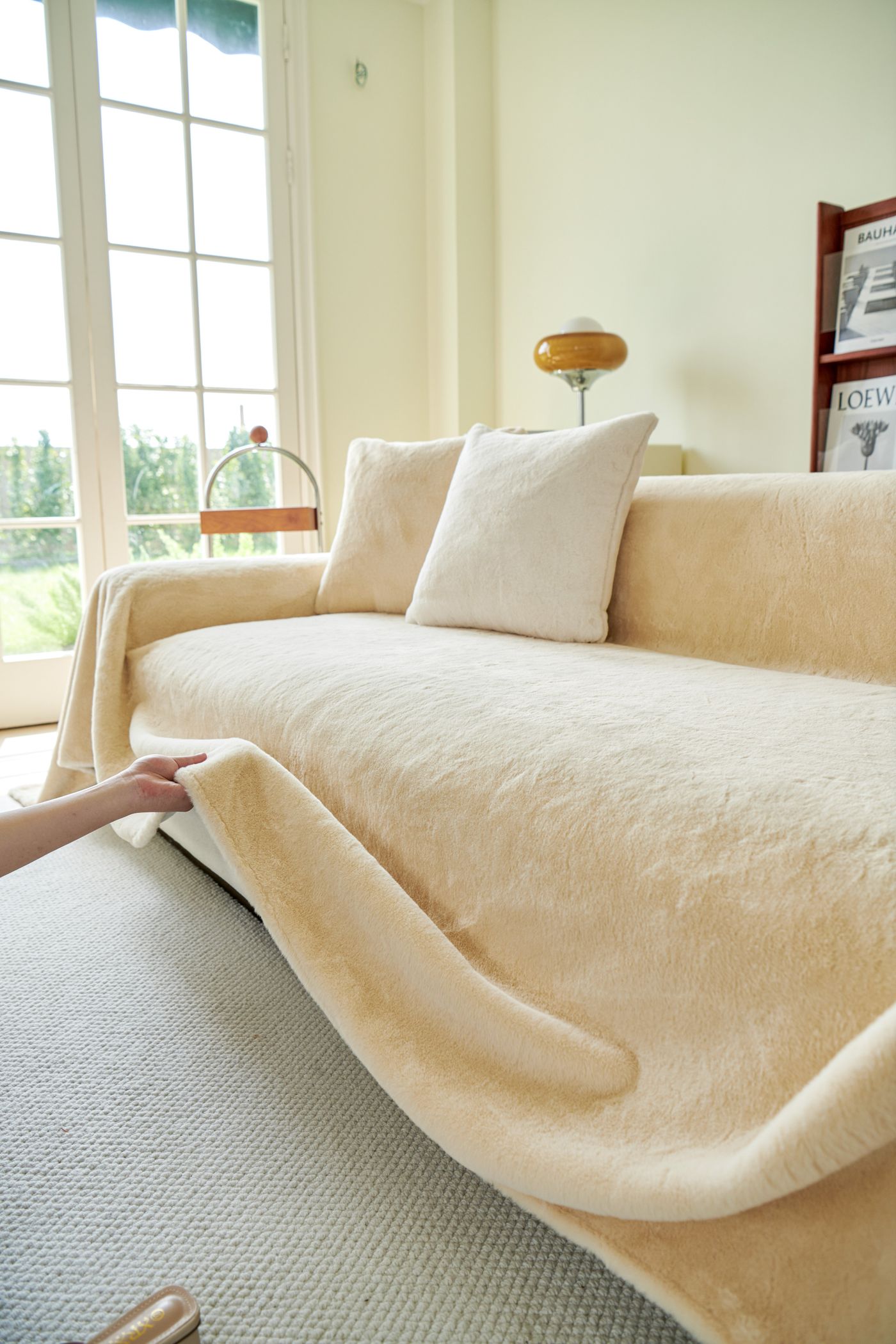
Cream furniture cover draped over a sofa seat and arm. Illustrative photograph via Pexels.
Identify each removable section using the manufacturer’s terminology where possible. Count the real pieces rather than assuming every sofa has two matching seat covers and two matching back covers. Chaise sections, arm pieces, and differently shaped cushions can make a set more complicated than it looks from the front.
Record position as well as quantity. If two pieces have similar dimensions but different closures, note that distinction before they leave the furniture. A photograph of the reverse side may be more helpful than another styled room picture. Avoid attaching adhesive labels or pins to a textile unless the maker explicitly permits the method.
Mark the record as a verified complete set only when the physical pieces agree with the list. If a section is missing, retain the gap in the record. A storage bag labeled “complete” should not mean “everything that happened to be on the laundry chair.” Honest identification prevents a planned room refresh from becoming an unexpected replacement search.
Store a set as ready only after it has completed the care and drying process specified for its components. A bag of recently removed covers may be organized, but it is not automatically ready to fit. Keep its condition visible so someone does not open it expecting a quick seasonal change.
Choose appropriate temporary containment for covers awaiting care, considering the actual textile and its condition. Do not seal damp material into long-term storage to keep the closet tidy. If care is unresolved, retain the label information and make that the next task rather than quietly moving the set into the clean group.
The table-linen storage guide uses table fit and ready condition to distinguish otherwise similar textiles. Slipcovers need their own furniture-specific inventory, but the same practical question applies: can the next person tell what this set belongs to and what must happen before it returns to use?

Person placing a cushion on a covered sofa. Illustrative photograph via Pexels.
Read the labels on the actual pieces. A body cover, cushion cover, and decorative overlay should not be assumed to share identical instructions because they came from the same room. Keep readable photographs or a linked manufacturer reference while retaining the original labels in place.
Do not turn the inventory into a simplified washing prescription. The point is to connect each component with its own directions, including restrictions. If a label is missing or contradictory, ask the manufacturer or a suitable textile-care professional before choosing a method. Guessing from a zipper or fabric appearance can undermine the benefit of a removable design.
Record care status after the work is done, including any unresolved damage or change in fit. This is different from promising that cleaning restored the item to new condition. Keep a damaged closure or uncertain shrinkage issue visible rather than hiding it inside the folded set for the next person to discover.
Once the pieces are appropriately clean and fully dry, group them in a way that preserves the set and suits the textile. Avoid a tight universal folding rule. Bulky padding, delicate finishes, or specific maker instructions may require a different approach from a simple unpadded cotton cover.
Keep the furniture identifier and contents list readable from the storage position. If several sets share a container, use clearly separated appropriate enclosures or sections. Color alone is weak identification: two beige covers can belong to entirely different furniture, and an artificial-light photograph may make one set appear similar to another.
Allow enough room to remove and replace the complete set without pulling apart neighboring storage. The guide to keeping closet accessories retrievable concerns different contents, but it illustrates why access matters as much as packed volume. A set that fits only after forceful compression may not have a workable long-term home there.
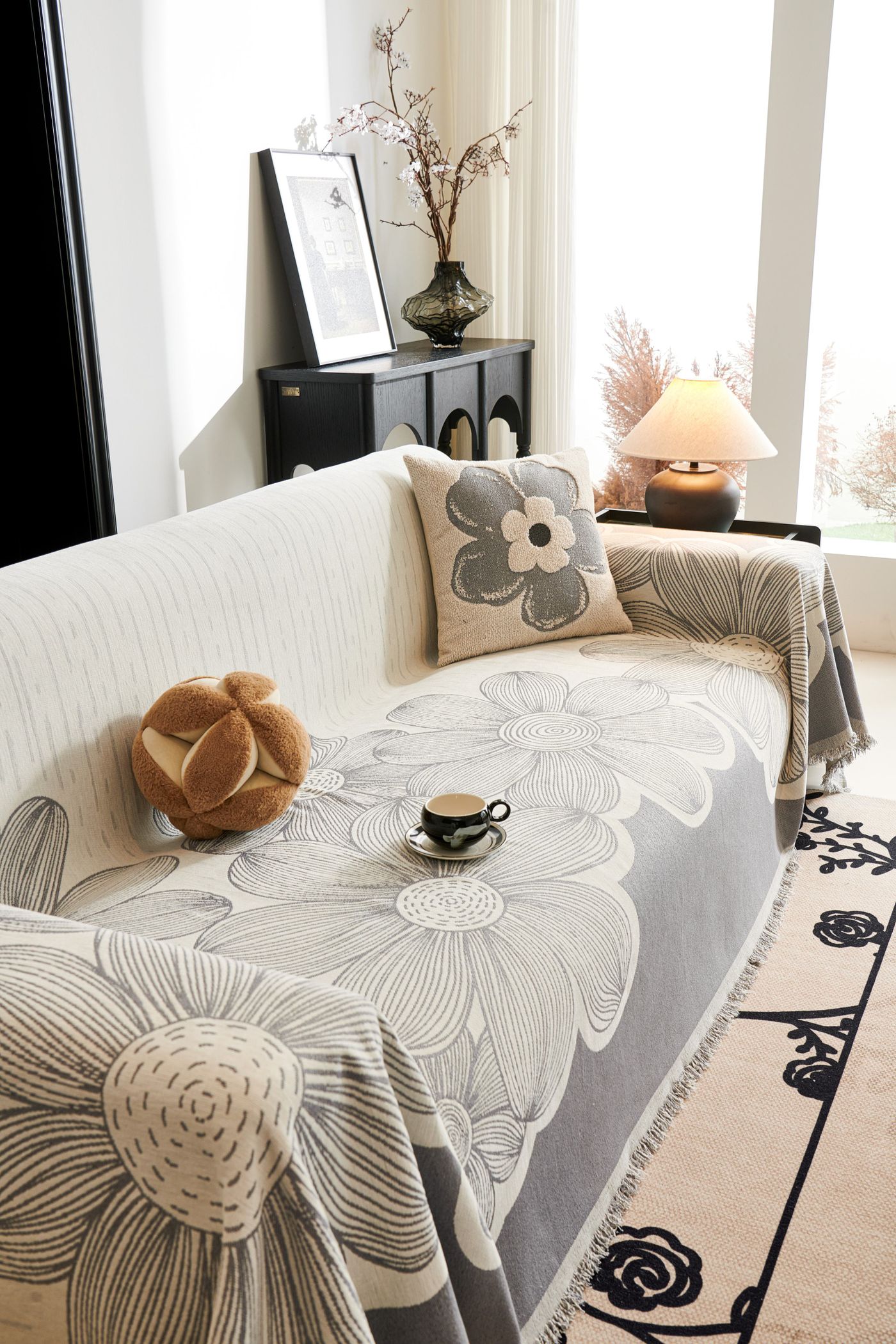
Floral-covered sofa with separate decorative cushions. Illustrative photograph via Pexels.
Before removing the current cover, check that the replacement is the correct identified set and that all required pieces are present. Review the fitting instructions while the furniture is still usable. Do not strip the sofa first and discover that the stored “spare” belongs to a smaller configuration.
Keep the outgoing pieces together as they are removed according to the furniture instructions. Give them a temporary status such as “removed, awaiting label check and care.” Keep the incoming set separate until fitting is complete, especially when both are similar colors and pieces could easily migrate between groups.
After fitting, compare the remaining pieces with the record. A spare-looking panel may indicate an incomplete installation rather than an optional extra. Resolve the mismatch using the product instructions. Update the inventory with the currently fitted set and the actual condition of the set returning to storage.
Review stored sets when furniture leaves the room or household. A compatible spare cover can be useful to the next owner, but only when the model identity, completeness, and condition are clear. Do not include a near match as though it were a verified replacement simply to empty a shelf.
If a set no longer has matching furniture, decide whether it has a realistic destination. Retain the identifying information for an accurate sale or donation description where appropriate. Otherwise, choose a suitable local textile reuse or disposal route instead of keeping a mysterious bundle indefinitely because it once cost money.
Use the capacity ceiling method when the collection grows. The relevant capacity includes the space for a complete ready set and a workable changeover, not a theoretical number of covers squeezed into a vacuum bag. Keep the storage system proportional to furniture you still own and choices you genuinely intend to use.
Blue checked sofa cover with contrasting cushions. Illustrative photograph via Pexels.
Ask another household member to locate a specific set and explain its contents and care status from the record. They should not need to unfold every piece or recognize a cushion seam from memory. If the answer is unclear, improve the identifier before adding another label category or buying another container.
One clear furniture reference, one accurate parts list, and an honest readiness status can prevent most of the confusion this system targets. The useful result is being able to begin an appropriate cover change with the correct complete set, rather than owning a perfectly folded collection that nobody can confidently put back on the furniture.
Explore related decisions in our Home Organization hub.
Editorial research checked October 20, 2026. Published trend reports are context for these editorial applications, not verified live keyword rankings. Practical household guidance; photographs do not document a tested household or authenticate pictured materials.
Read the original article on Small Home Rhythm
Houzz’s Fall 2026 report describes adaptable, personal interiors. Keeping an existing slipcover set identifiable supports that direction without treating another cover purchase as necessary. This guide concerns the identity, completeness, and return of removable furniture-cover sets. It does not establish compatibility or provide a universal washing method.
Name the furniture before naming the cover
Record the furniture manufacturer, model, configuration, and any size or version information needed to identify it. “Living-room sofa” may be enough while you own one sofa, but it becomes ambiguous when a chair joins the room or a family member stores another set nearby. Add a private furniture identifier if the model is uncertain.
Photograph the correctly fitted cover while the arrangement is known. Include the overall furniture and useful details such as cushion positions, closures, or different left and right sections. The photographs are a memory aid; they do not prove that a similar-looking replacement will fit or show how an unfamiliar fastening should be forced into place.
Keep the order confirmation or product reference when available. IKEA’s KIVIK and UPPLAND sofa covers, for example, have different model identities even when both are described as sofa covers. Preserve that distinction rather than filing everything under color. The paper-versus-digital records guide can help retain a compact, retrievable reference without keeping every packaging insert.
Cream furniture cover draped over a sofa seat and arm. Illustrative photograph via Pexels.
Make a parts list from the actual complete set
Identify each removable section using the manufacturer’s terminology where possible. Count the real pieces rather than assuming every sofa has two matching seat covers and two matching back covers. Chaise sections, arm pieces, and differently shaped cushions can make a set more complicated than it looks from the front.
Record position as well as quantity. If two pieces have similar dimensions but different closures, note that distinction before they leave the furniture. A photograph of the reverse side may be more helpful than another styled room picture. Avoid attaching adhesive labels or pins to a textile unless the maker explicitly permits the method.
Mark the record as a verified complete set only when the physical pieces agree with the list. If a section is missing, retain the gap in the record. A storage bag labeled “complete” should not mean “everything that happened to be on the laundry chair.” Honest identification prevents a planned room refresh from becoming an unexpected replacement search.
Give clean-ready and awaiting-care sets different places
Store a set as ready only after it has completed the care and drying process specified for its components. A bag of recently removed covers may be organized, but it is not automatically ready to fit. Keep its condition visible so someone does not open it expecting a quick seasonal change.
Choose appropriate temporary containment for covers awaiting care, considering the actual textile and its condition. Do not seal damp material into long-term storage to keep the closet tidy. If care is unresolved, retain the label information and make that the next task rather than quietly moving the set into the clean group.
The table-linen storage guide uses table fit and ready condition to distinguish otherwise similar textiles. Slipcovers need their own furniture-specific inventory, but the same practical question applies: can the next person tell what this set belongs to and what must happen before it returns to use?
Person placing a cushion on a covered sofa. Illustrative photograph via Pexels.
Preserve each component’s care information
Read the labels on the actual pieces. A body cover, cushion cover, and decorative overlay should not be assumed to share identical instructions because they came from the same room. Keep readable photographs or a linked manufacturer reference while retaining the original labels in place.
Do not turn the inventory into a simplified washing prescription. The point is to connect each component with its own directions, including restrictions. If a label is missing or contradictory, ask the manufacturer or a suitable textile-care professional before choosing a method. Guessing from a zipper or fabric appearance can undermine the benefit of a removable design.
Record care status after the work is done, including any unresolved damage or change in fit. This is different from promising that cleaning restored the item to new condition. Keep a damaged closure or uncertain shrinkage issue visible rather than hiding it inside the folded set for the next person to discover.
Fold for identification as well as volume
Once the pieces are appropriately clean and fully dry, group them in a way that preserves the set and suits the textile. Avoid a tight universal folding rule. Bulky padding, delicate finishes, or specific maker instructions may require a different approach from a simple unpadded cotton cover.
Keep the furniture identifier and contents list readable from the storage position. If several sets share a container, use clearly separated appropriate enclosures or sections. Color alone is weak identification: two beige covers can belong to entirely different furniture, and an artificial-light photograph may make one set appear similar to another.
Allow enough room to remove and replace the complete set without pulling apart neighboring storage. The guide to keeping closet accessories retrievable concerns different contents, but it illustrates why access matters as much as packed volume. A set that fits only after forceful compression may not have a workable long-term home there.
Floral-covered sofa with separate decorative cushions. Illustrative photograph via Pexels.
Keep the replacement separate during a changeover
Before removing the current cover, check that the replacement is the correct identified set and that all required pieces are present. Review the fitting instructions while the furniture is still usable. Do not strip the sofa first and discover that the stored “spare” belongs to a smaller configuration.
Keep the outgoing pieces together as they are removed according to the furniture instructions. Give them a temporary status such as “removed, awaiting label check and care.” Keep the incoming set separate until fitting is complete, especially when both are similar colors and pieces could easily migrate between groups.
After fitting, compare the remaining pieces with the record. A spare-looking panel may indicate an incomplete installation rather than an optional extra. Resolve the mismatch using the product instructions. Update the inventory with the currently fitted set and the actual condition of the set returning to storage.
Plan for a furniture move or ownership change
Review stored sets when furniture leaves the room or household. A compatible spare cover can be useful to the next owner, but only when the model identity, completeness, and condition are clear. Do not include a near match as though it were a verified replacement simply to empty a shelf.
If a set no longer has matching furniture, decide whether it has a realistic destination. Retain the identifying information for an accurate sale or donation description where appropriate. Otherwise, choose a suitable local textile reuse or disposal route instead of keeping a mysterious bundle indefinitely because it once cost money.
Use the capacity ceiling method when the collection grows. The relevant capacity includes the space for a complete ready set and a workable changeover, not a theoretical number of covers squeezed into a vacuum bag. Keep the storage system proportional to furniture you still own and choices you genuinely intend to use.
Blue checked sofa cover with contrasting cushions. Illustrative photograph via Pexels.
Test the system without refitting the room
Ask another household member to locate a specific set and explain its contents and care status from the record. They should not need to unfold every piece or recognize a cushion seam from memory. If the answer is unclear, improve the identifier before adding another label category or buying another container.
One clear furniture reference, one accurate parts list, and an honest readiness status can prevent most of the confusion this system targets. The useful result is being able to begin an appropriate cover change with the correct complete set, rather than owning a perfectly folded collection that nobody can confidently put back on the furniture.
Explore related decisions in our Home Organization hub.
Sources and editorial scope
Editorial research checked October 20, 2026. Published trend reports are context for these editorial applications, not verified live keyword rankings. Practical household guidance; photographs do not document a tested household or authenticate pictured materials.
Related reading
- Keep Original Furniture Hardware Together During Reversible Decor Changes
- Lend Table Decor to Friends Without Losing Sets or Return Dates
- Wash a Removable Shower Curtain With a Complete Drying and Return Plan
- Explore more Closets, Cabinets & Drawers articles
Read the original article on Small Home Rhythm