L
Lena Morgan
Guest
- Thread Author
- #1
A family zine is a small publication with a beginning, an order, and an intended reader. It can contain drawings, short interviews, photographs, or a page about something ordinary at home. What distinguishes it from a loose pile of artwork is the shared decision about which pages belong together and how someone will read them.
Pinterest’s August 2026 hobbies report includes personal mini-media alongside journaling interests. This guide applies that idea to one modest family issue made in a multipurpose room. It focuses on page planning, contributions, permission, and finishing a readable copy rather than collecting more craft supplies or reproducing a professional magazine workflow.
Pick a subject small enough to finish. “Our rainy Saturday issue” or “five things we made this month” gives the family a boundary without requiring everyone to document an entire season. A single issue can be worthwhile even if nobody wants to make a second one.
Choose the intended reader at the same time. A household-only copy, a gift for a grandparent, and a booklet distributed outside the family need different decisions about names, photographs, and personal details. Keep the first version private if sharing is unresolved. A finished craft does not automatically create permission to publish every contribution.
Decide the simplest suitable physical format using materials you already have. A few folded sheets can become a reading mock-up; binding, cutting, or fastening methods need appropriate tools and adult supervision where relevant. The art-supply organization guide can help limit the setup to this project instead of unpacking the entire craft collection.
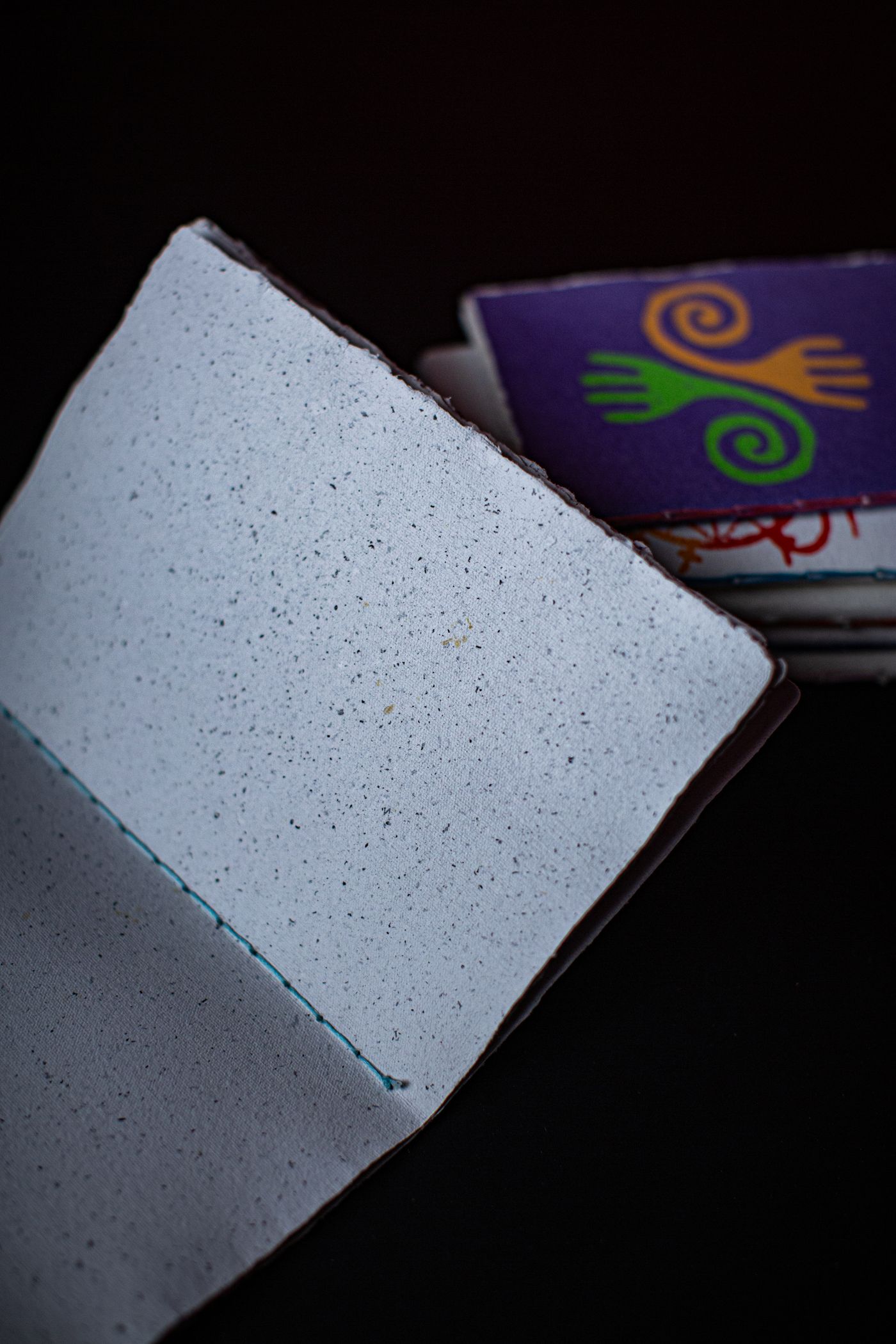
Open handmade-looking notebook with textured blank pages; page-planning context. Illustrative photograph via Pexels.
Use blank scrap paper to establish the actual page sequence. Fold or arrange it in the intended format, then number the pages in the order someone will read them. This is a physical rehearsal, not a decorative diagram. It helps reveal where the cover, opening, middle, and ending really fall.
Do not assume the order of pages laid flat on a table will match a booklet after folding or printing. For an unfamiliar format, make and read a complete rough copy before committing finished artwork. Keep the method simple enough that the responsible person understands how the pages become the final object.
Assign a job to each page using short working notes: title, two drawings, a short interview, or credits. Leave a page unassigned if the issue already feels complete. A smaller readable publication is easier to finish than a thick booklet padded with material nobody particularly wanted to contribute.
Invite each participant to choose a manageable contribution. One might draw a household object, another write three sentences, and another dictate an answer to a question. Explain the available page space and the agreed completion point. A request for “anything creative” can leave people unsure what will fit or when they are done.
Keep the contribution in the creator’s voice. If an adult helps with spelling, transcription, or layout, distinguish that assistance from authorship where useful. Read dictated wording back to its speaker before treating it as approved text. A child should be able to recognize their own contribution after the page has been assembled.
Ask before editing or cropping someone’s work. If a piece will not fit, discuss a smaller version or a different page arrangement rather than silently cutting away the part its maker values. The family handoff guide offers a practical parallel: give a clear task and make the handoff visible instead of assuming everyone understood an unwritten plan.
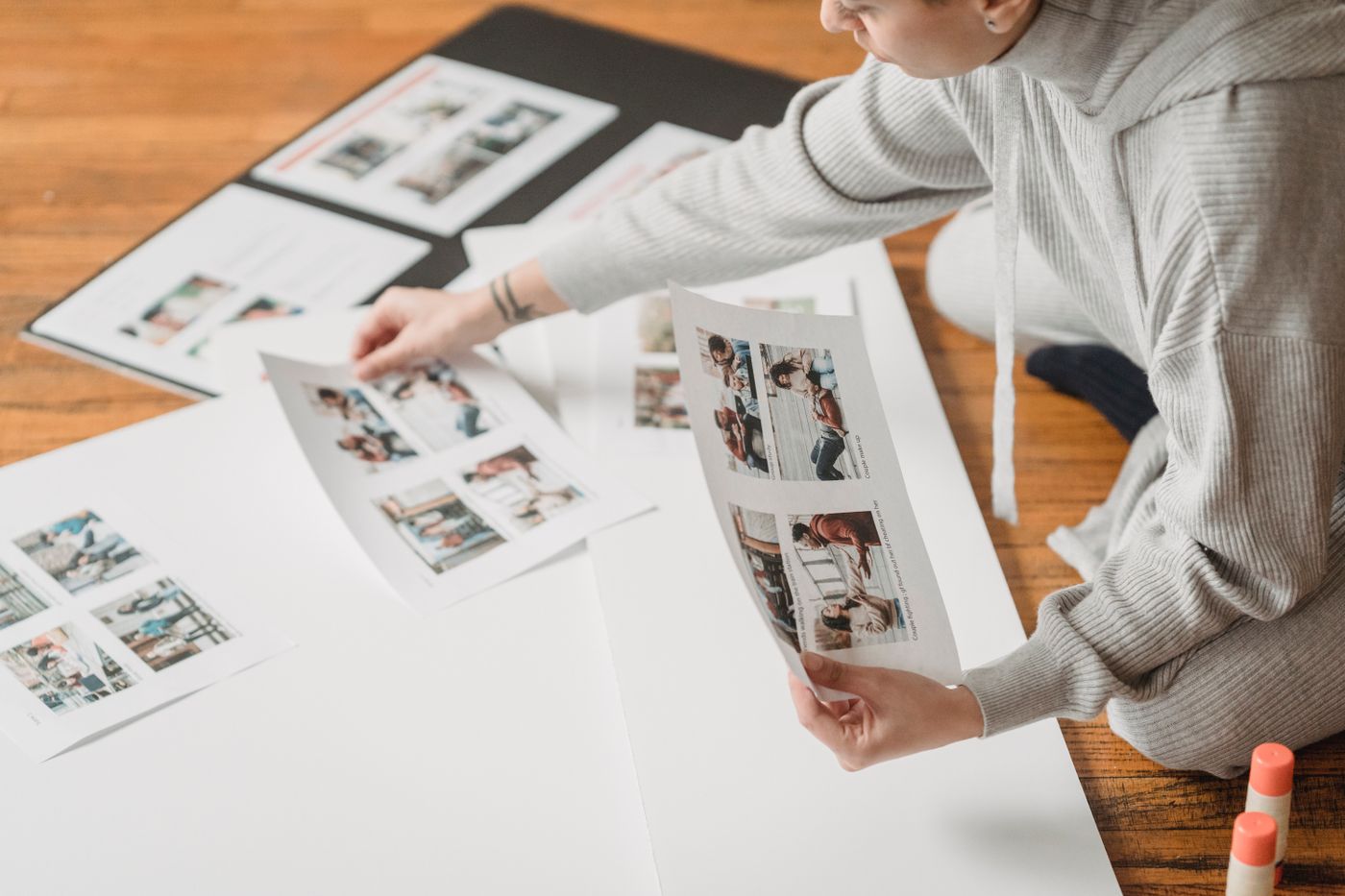
Printed photographs being arranged across white sheets; layout context. Illustrative photograph via Pexels.
Use original household contributions where possible. A magazine clipping can help discuss a layout, but it should not quietly become family-authored content in a copy intended for distribution. If you use third-party material, establish that the intended use is permitted and retain the relevant source information rather than assuming a craft format removes those questions.
Keep original photographs and artwork separate from pieces intended to be cut or glued. Work from suitable copies when the original matters to someone. The family-photo guide can help decide which version is the keepsake and which is project material. Do not let a quick craft session become the accidental destruction of the only print.
Set aside images or stories that need permission before use. A family member can decline a photograph or prefer a first name, initials, or no identifying credit. Keep unresolved material out of the shareable copy while the decision is pending. An empty page can be redesigned more easily than an unwanted disclosure can be retrieved.
Place the content in the mock-up’s order and read it from beginning to end. Check whether a page makes sense without an adult standing beside it explaining the joke or pointing to the next panel. Add a short caption or move an item when that makes the sequence clearer.
Leave enough usable space around the fold, edge, or fastening for the chosen format. Do not promise a universal margin measurement when different paper sizes and binding methods behave differently. Test the actual rough copy: can someone open it, hold it, and read the intended content without fighting the construction?
For a shared table, keep the issue on one appropriate project support or in an identified folder between sessions. The multipurpose dining-table guide helps protect meals and other ordinary uses. The zine should have a pause routine so its unfinished pages do not become an indefinite claim on the room.
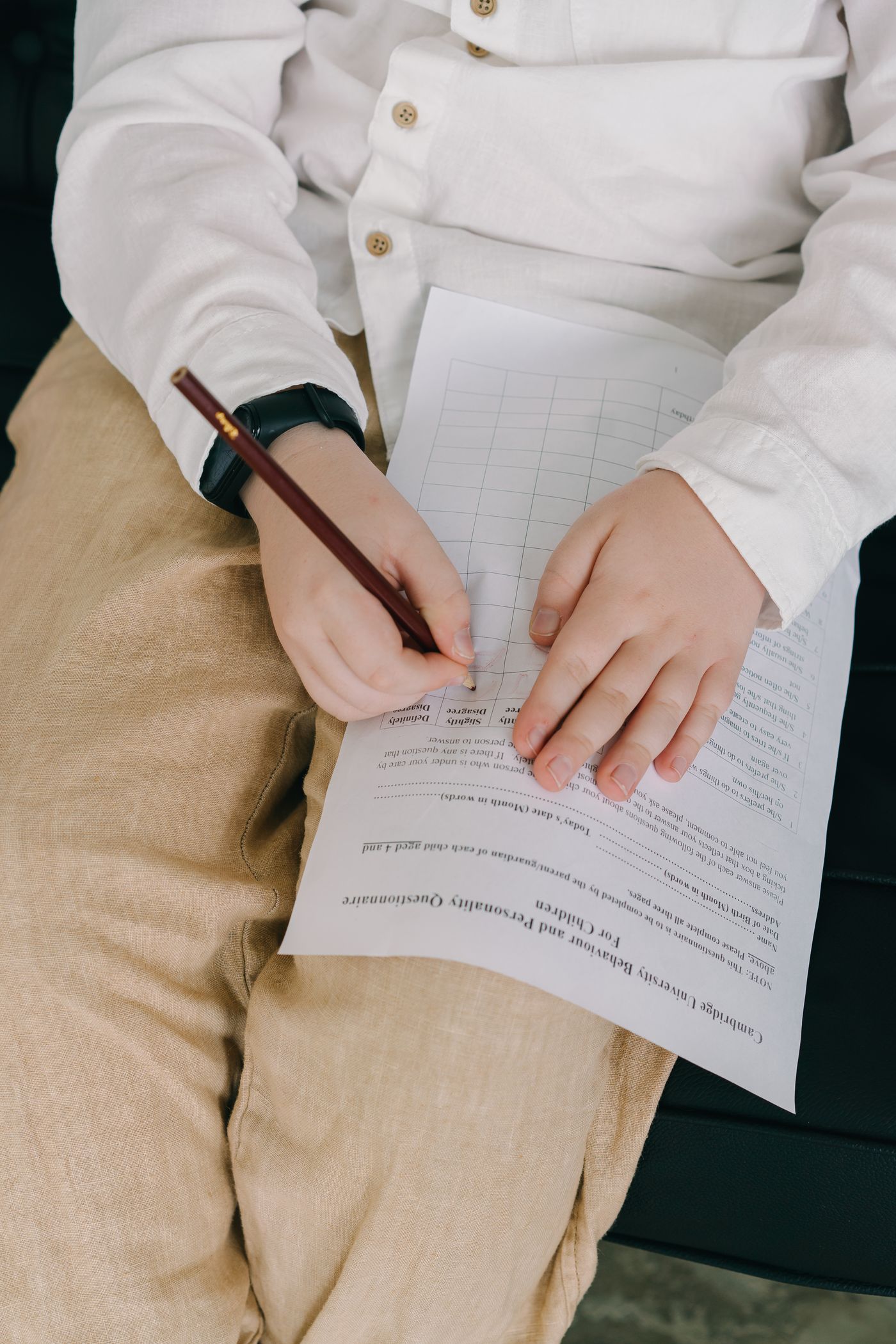
Child writing on a printed sheet; contribution-workflow context. Illustrative photograph via Pexels.
Include the title, issue date or number, and the agreed contributor credits. A simple note such as “words dictated by Jo, written down by Alex” can preserve the real contribution without overcomplicating the page. Ask each person how they want to be named in the intended copy.
Mark a rough copy as a draft and give the approved reading copy a distinguishable version. If someone requests a change, update the intended distribution copy rather than leaving several almost-identical files or printouts with no clear status. Keep any private source material out of a folder or link intended for sharing.
Credits are useful even for a household-only issue because they preserve who made what. They are not a substitute for permission to use someone else’s photograph, artwork, or text. Keep the record proportionate to the project while making authorship and sharing decisions understandable to the people involved.
Let contributors see their pages in context before reproducing or sharing the issue. Check names, captions, personal details, and whether anyone wants a contribution removed. Review photographs for addresses, school information, screens, documents, or other details that were not part of the intended story.
If the issue will be copied, make one complete proof using the actual intended process. Check orientation, sequence, legibility, and whether the fastening method works appropriately. A digital page that looks correct on a screen does not establish that a folded printed copy will read in the right order.
Decide how many copies have a real recipient before making them. You can photograph or scan a private finished copy for household retention without posting it publicly. Keep any shared link or print distribution within the permission everyone agreed to, and revisit that decision if the intended audience changes.
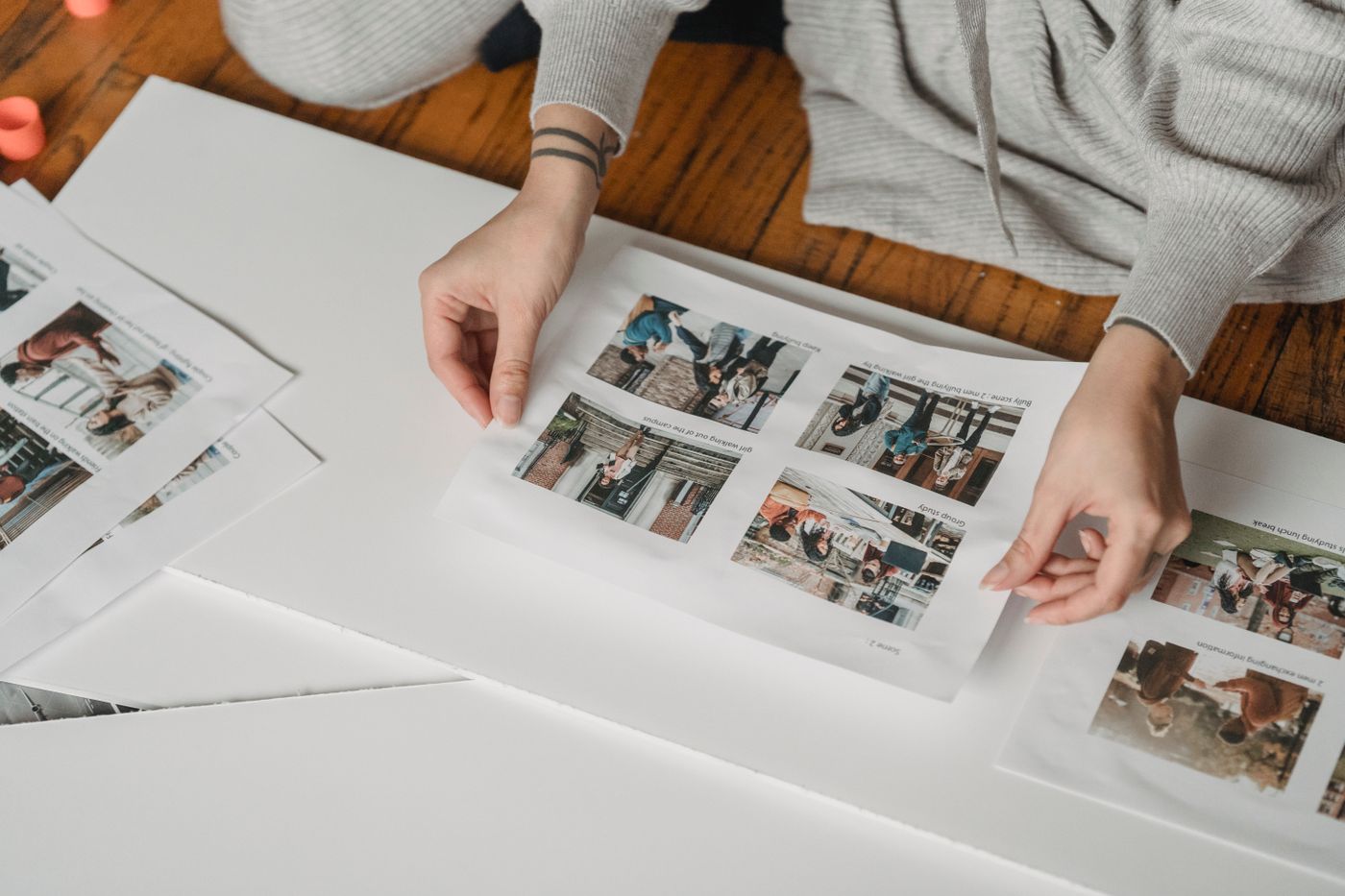
Hands positioning photographs on a page; final assembly context. Illustrative photograph via Pexels.
Return tools and unused materials to their proper places, handling sharp tools and fasteners appropriately. Keep the finished issue and only the working material that has a clear purpose. A page that someone values independently can return to that person rather than remaining trapped in a communal project folder.
Note one change that would make another issue easier, such as fewer pages or a simpler contribution prompt. Do not schedule a permanent family publishing routine unless people want one. A single small zine can be complete: a readable object with a clear audience, recognizable voices, and a finish that returns the multipurpose room to ordinary use.
Explore related decisions in our Family Home hub.
Editorial research checked October 20, 2026. Published trend reports are context for these editorial applications, not verified live keyword rankings. Practical household guidance; photographs do not document a tested household or authenticate pictured materials.
Read the original article on Small Home Rhythm
Pinterest’s August 2026 hobbies report includes personal mini-media alongside journaling interests. This guide applies that idea to one modest family issue made in a multipurpose room. It focuses on page planning, contributions, permission, and finishing a readable copy rather than collecting more craft supplies or reproducing a professional magazine workflow.
Choose one issue with a clear boundary
Pick a subject small enough to finish. “Our rainy Saturday issue” or “five things we made this month” gives the family a boundary without requiring everyone to document an entire season. A single issue can be worthwhile even if nobody wants to make a second one.
Choose the intended reader at the same time. A household-only copy, a gift for a grandparent, and a booklet distributed outside the family need different decisions about names, photographs, and personal details. Keep the first version private if sharing is unresolved. A finished craft does not automatically create permission to publish every contribution.
Decide the simplest suitable physical format using materials you already have. A few folded sheets can become a reading mock-up; binding, cutting, or fastening methods need appropriate tools and adult supervision where relevant. The art-supply organization guide can help limit the setup to this project instead of unpacking the entire craft collection.
Open handmade-looking notebook with textured blank pages; page-planning context. Illustrative photograph via Pexels.
Make a reading mock-up before making finished pages
Use blank scrap paper to establish the actual page sequence. Fold or arrange it in the intended format, then number the pages in the order someone will read them. This is a physical rehearsal, not a decorative diagram. It helps reveal where the cover, opening, middle, and ending really fall.
Do not assume the order of pages laid flat on a table will match a booklet after folding or printing. For an unfamiliar format, make and read a complete rough copy before committing finished artwork. Keep the method simple enough that the responsible person understands how the pages become the final object.
Assign a job to each page using short working notes: title, two drawings, a short interview, or credits. Leave a page unassigned if the issue already feels complete. A smaller readable publication is easier to finish than a thick booklet padded with material nobody particularly wanted to contribute.
Give contributors choices with an endpoint
Invite each participant to choose a manageable contribution. One might draw a household object, another write three sentences, and another dictate an answer to a question. Explain the available page space and the agreed completion point. A request for “anything creative” can leave people unsure what will fit or when they are done.
Keep the contribution in the creator’s voice. If an adult helps with spelling, transcription, or layout, distinguish that assistance from authorship where useful. Read dictated wording back to its speaker before treating it as approved text. A child should be able to recognize their own contribution after the page has been assembled.
Ask before editing or cropping someone’s work. If a piece will not fit, discuss a smaller version or a different page arrangement rather than silently cutting away the part its maker values. The family handoff guide offers a practical parallel: give a clear task and make the handoff visible instead of assuming everyone understood an unwritten plan.
Printed photographs being arranged across white sheets; layout context. Illustrative photograph via Pexels.
Keep source material and publication material distinct
Use original household contributions where possible. A magazine clipping can help discuss a layout, but it should not quietly become family-authored content in a copy intended for distribution. If you use third-party material, establish that the intended use is permitted and retain the relevant source information rather than assuming a craft format removes those questions.
Keep original photographs and artwork separate from pieces intended to be cut or glued. Work from suitable copies when the original matters to someone. The family-photo guide can help decide which version is the keepsake and which is project material. Do not let a quick craft session become the accidental destruction of the only print.
Set aside images or stories that need permission before use. A family member can decline a photograph or prefer a first name, initials, or no identifying credit. Keep unresolved material out of the shareable copy while the decision is pending. An empty page can be redesigned more easily than an unwanted disclosure can be retrieved.
Assemble for ordinary reading
Place the content in the mock-up’s order and read it from beginning to end. Check whether a page makes sense without an adult standing beside it explaining the joke or pointing to the next panel. Add a short caption or move an item when that makes the sequence clearer.
Leave enough usable space around the fold, edge, or fastening for the chosen format. Do not promise a universal margin measurement when different paper sizes and binding methods behave differently. Test the actual rough copy: can someone open it, hold it, and read the intended content without fighting the construction?
For a shared table, keep the issue on one appropriate project support or in an identified folder between sessions. The multipurpose dining-table guide helps protect meals and other ordinary uses. The zine should have a pause routine so its unfinished pages do not become an indefinite claim on the room.
Child writing on a printed sheet; contribution-workflow context. Illustrative photograph via Pexels.
Add credits and a clear version
Include the title, issue date or number, and the agreed contributor credits. A simple note such as “words dictated by Jo, written down by Alex” can preserve the real contribution without overcomplicating the page. Ask each person how they want to be named in the intended copy.
Mark a rough copy as a draft and give the approved reading copy a distinguishable version. If someone requests a change, update the intended distribution copy rather than leaving several almost-identical files or printouts with no clear status. Keep any private source material out of a folder or link intended for sharing.
Credits are useful even for a household-only issue because they preserve who made what. They are not a substitute for permission to use someone else’s photograph, artwork, or text. Keep the record proportionate to the project while making authorship and sharing decisions understandable to the people involved.
Review the complete copy together
Let contributors see their pages in context before reproducing or sharing the issue. Check names, captions, personal details, and whether anyone wants a contribution removed. Review photographs for addresses, school information, screens, documents, or other details that were not part of the intended story.
If the issue will be copied, make one complete proof using the actual intended process. Check orientation, sequence, legibility, and whether the fastening method works appropriately. A digital page that looks correct on a screen does not establish that a folded printed copy will read in the right order.
Decide how many copies have a real recipient before making them. You can photograph or scan a private finished copy for household retention without posting it publicly. Keep any shared link or print distribution within the permission everyone agreed to, and revisit that decision if the intended audience changes.
Hands positioning photographs on a page; final assembly context. Illustrative photograph via Pexels.
Close the project instead of storing every draft
Return tools and unused materials to their proper places, handling sharp tools and fasteners appropriately. Keep the finished issue and only the working material that has a clear purpose. A page that someone values independently can return to that person rather than remaining trapped in a communal project folder.
Note one change that would make another issue easier, such as fewer pages or a simpler contribution prompt. Do not schedule a permanent family publishing routine unless people want one. A single small zine can be complete: a readable object with a clear audience, recognizable voices, and a finish that returns the multipurpose room to ordinary use.
Explore related decisions in our Family Home hub.
Sources and editorial scope
Editorial research checked October 20, 2026. Published trend reports are context for these editorial applications, not verified live keyword rankings. Practical household guidance; photographs do not document a tested household or authenticate pictured materials.
Related reading
- Family Movie Night in a Small Living Room: Seats, Shared Snacks, and the Finish
- Plan a Shared Ornament-Making Session When Children Want Different Designs
- Plan a Family Building Challenge With the Blocks You Already Have
- Explore more Family Chores & Home Routines articles
Read the original article on Small Home Rhythm